For Work
Breath Work App for Business Professionals
Rapid, effective breathing routines to reset stress, improve focus, and sustain energy—without leaving your desk. Science-backed techniques designed for busy professionals who need immediate results.
Why Breathwork Works at Work
Breathwork tunes the autonomic nervous system—the part of your body that controls stress responses, heart rate, and mental clarity. For business professionals facing constant pressure, decision fatigue, and information overload, breathwork offers a scientifically-proven way to reset your nervous system in minutes.
Unlike meditation or exercise, breathwork can be practiced discreetly at your desk, in a conference room, or even during a brief break. A few minutes of guided breathing can reduce cortisol by up to 23%, steady heart rate variability, and improve mental clarity—ideal for context switching between meetings, preparing for presentations, and managing high-stakes situations.
Immediate Stress Relief
Activate the parasympathetic nervous system within 2-3 minutes, reducing cortisol and lowering heart rate for immediate stress relief between meetings or during high-pressure situations.
Enhanced Focus
Synchronize brain waves into optimal states for concentration and decision-making. Coherent breathing improves cognitive performance and helps you enter flow state for sustained productivity.
Sustained Energy
Restore alert calm without jittery stimulation. Breathwork provides sustained energy by optimizing heart rate variability, making it ideal for afternoon slumps and long workdays.
Key Insight:
The workplace is filled with stressors that activate the sympathetic nervous system (fight-or-flight). Breathwork directly counteracts this by activating the parasympathetic nervous system (rest-and-digest), allowing you to maintain peak performance under pressure without burning out.
The Science Behind Workplace Breathwork
Research from institutions like Harvard, Stanford, and the National Institutes of Health demonstrates that breathwork produces measurable physiological changes that directly benefit workplace performance.
How Breathwork Affects Your Body at Work
Cortisol Reduction
Studies show that controlled breathing can reduce cortisol (stress hormone) by up to 23% within minutes. Lower cortisol means better decision-making, reduced anxiety, and improved emotional regulation—critical for leadership and high-stakes situations.
Heart Rate Variability (HRV)
Breathwork improves HRV, a marker of resilience and adaptability. Higher HRV is associated with better cognitive performance, emotional regulation, and stress recovery—essential for managing the demands of modern work environments.
Brain Wave Synchronization
Coherent breathing at 5-6 breaths per minute synchronizes brain waves into alpha (8-12 Hz) and theta (4-8 Hz) states. These frequencies are associated with relaxed alertness, creativity, and sustained attention—perfect for entering flow state and maintaining focus during long work sessions.
Amygdala Calming
Breathwork calms the amygdala (the brain's fear center), reducing anxiety and emotional reactivity. This allows for more measured responses to workplace challenges and better interpersonal communication under stress.
Research Finding:
A 2020 study published in Frontiers in Psychology found that breathwork interventions significantly improved workplace performance metrics, including decision-making speed, emotional regulation, and stress resilience. Participants who practiced breathwork for just 10 minutes daily showed measurable improvements in cognitive function and job satisfaction over 8 weeks.
Fast Routines for Your Workday
These time-efficient routines are designed to fit seamlessly into your busy schedule. Each session takes 2-5 minutes and can be practiced discreetly at your desk, in a conference room, or during a brief break.
Use 3–5 minute sessions between tasks or meetings.
Pre-Meeting Reset (2–3 min)
Before important meetings
Box Breathing (4-4-4-4) to lower stress and sharpen presence. This technique helps you enter meetings with clarity, reduces anxiety, and improves your ability to listen and respond effectively.
- • Inhale 4 seconds
- • Hold 4 seconds
- • Exhale 4 seconds
- • Hold 4 seconds
- • Repeat for 2-3 minutes
Afternoon Clarity (3–5 min)
Mid-afternoon energy boost
Coherent Breathing (~5–6 breaths/min) to restore alert calm without jittery stimulation. Perfect for overcoming the 2-3 PM energy dip and maintaining productivity through the afternoon.
- • Breathe at 5-6 breaths per minute
- • Equal inhale and exhale
- • Smooth, rhythmic pattern
- • Practice for 3-5 minutes
Post-Presentation Downshift (2–4 min)
After public speaking or presentations
Longer Exhales (4 in / 6 out) to release tension and activate the parasympathetic nervous system. This helps you recover from the adrenaline rush of public speaking and return to baseline.
- • Inhale 4 seconds
- • Exhale 6 seconds
- • Focus on relaxing the exhale
- • Repeat for 2-4 minutes
Morning Energy Boost (3–5 min)
Start your day right
Coherent Breathing to set the tone for a productive day. This morning routine improves focus, reduces morning stress, and provides sustained energy without caffeine dependency.
- • Practice upon waking or before work
- • 5-6 breaths per minute
- • Sets positive tone for the day
Decision-Making Clarity (2–3 min)
Before important decisions
Box Breathing to clear mental fog and improve decision-making. This technique enhances cognitive function and helps you make clearer, more rational choices under pressure.
Before Bed (Optional)
Transition from work to rest
4-7-8 Breathing to help transition from work mode to rest. This technique reduces cortisol, promotes melatonin release, and improves sleep quality for better recovery.
- • Inhale 4 seconds
- • Hold 7 seconds
- • Exhale 8 seconds
- • Repeat 4-8 cycles
Essential Breathing Techniques for Professionals
Master these proven techniques to handle any workplace situation. Each technique is designed for specific outcomes and can be practiced discreetly in any professional setting.
Box Breathing (4-4-4-4)
Also known as square breathing, this technique is used by Navy SEALs, athletes, and executives to maintain calm under pressure. It's perfect for pre-meeting preparation, stress management, and improving focus.
How to Practice:
- Sit comfortably with your back straight
- Inhale through your nose for 4 seconds
- Hold your breath for 4 seconds
- Exhale through your nose for 4 seconds
- Hold at the bottom for 4 seconds
- Repeat for 2-5 minutes
Best For:
Pre-meeting prep, stress relief, focus
Duration:
2-5 minutes
Coherent Breathing (5-6 breaths/min)
This technique synchronizes your heart rate and breathing, optimizing heart rate variability (HRV) for peak performance. It's ideal for sustained focus, afternoon energy boosts, and entering flow state.
How to Practice:
- Breathe at a rate of 5-6 breaths per minute
- Equal length inhale and exhale (5 seconds each)
- Breathe through your nose, smoothly and rhythmically
- Focus on the rhythm, not forcing the breath
- Practice for 3-10 minutes
Best For:
Focus, energy, flow state, HRV optimization
Duration:
3-10 minutes
Extended Exhale Breathing (4-6 or 4-8)
Longer exhales activate the parasympathetic nervous system more strongly, making this technique excellent for stress relief, post-presentation recovery, and emotional regulation.
How to Practice:
- Inhale through your nose for 4 seconds
- Exhale slowly through your nose for 6-8 seconds
- Focus on making the exhale longer and more relaxed
- Let the inhale happen naturally
- Repeat for 2-5 minutes
Best For:
Stress relief, recovery, emotional regulation
Duration:
2-5 minutes
4-7-8 Breathing
Developed by Dr. Andrew Weil, this technique is particularly effective for sleep and deep relaxation. Use it at the end of the workday to transition from work mode to rest mode.
How to Practice:
- Exhale completely through your mouth
- Inhale through your nose for 4 seconds
- Hold your breath for 7 seconds
- Exhale through your mouth for 8 seconds
- Repeat 4-8 cycles
Best For:
Sleep, deep relaxation, end of day
Duration:
4-8 cycles (2-4 minutes)
Breathwork for Common Work Scenarios
Different workplace situations require different approaches. Here's how to use breathwork to handle specific professional challenges effectively.
Before a High-Stakes Presentation
Use Box Breathing (4-4-4-4) for 3-5 minutes before presenting. This reduces nervousness, improves vocal control, and enhances presence. The technique activates the parasympathetic nervous system, counteracting the fight-or-flight response that can interfere with public speaking.
Technique: Box Breathing • Duration: 3-5 min
During a Difficult Conversation
Practice extended exhale breathing (4-6) during pauses in conversation. This helps you stay calm, listen more effectively, and respond thoughtfully rather than reactively. The longer exhale activates the parasympathetic system, reducing emotional reactivity.
Technique: Extended Exhale • Duration: As needed
After Receiving Critical Feedback
Use Coherent Breathing for 3-5 minutes to process feedback objectively. This technique improves emotional regulation, reduces defensiveness, and helps you extract valuable insights from criticism without taking it personally.
Technique: Coherent Breathing • Duration: 3-5 min
When Overwhelmed by Tasks
Take a 2-3 minute Box Breathing break to reset your nervous system. This clears mental fog, improves prioritization, and helps you approach your workload with clarity rather than panic. The technique enhances cognitive function and decision-making under pressure.
Technique: Box Breathing • Duration: 2-3 min
Before an Important Decision
Practice Coherent Breathing for 3-5 minutes to optimize brain function. This synchronizes brain waves for better decision-making, reduces emotional bias, and improves your ability to weigh options rationally and clearly.
Technique: Coherent Breathing • Duration: 3-5 min
During a Long Work Session
Take 2-3 minute Coherent Breathing breaks every 90 minutes to maintain focus and prevent mental fatigue. This technique sustains energy, prevents burnout, and helps you maintain peak performance throughout long workdays.
Technique: Coherent Breathing • Duration: 2-3 min
After a Conflict or Disagreement
Use extended exhale breathing (4-8) for 3-5 minutes to calm your nervous system and process the situation. This helps you recover from the stress response, think more clearly, and approach resolution with a calmer mindset.
Technique: Extended Exhale • Duration: 3-5 min
When Switching Between Tasks
Take 1-2 minutes of Box Breathing between different types of work to reset your mental state. This improves context switching, reduces cognitive load, and helps you fully engage with each new task without carrying over stress from the previous one.
Technique: Box Breathing • Duration: 1-2 min
How to Integrate Breathwork into Your Workday
Making breathwork a consistent part of your professional routine requires strategy, not willpower. Here are practical tips for seamlessly integrating breathwork into your busy schedule.
Start with Calendar Blocks
Schedule 2-3 minute breathing breaks in your calendar, just like you would schedule meetings. Set reminders for natural transition points: before important meetings, after lunch, and during afternoon slumps. Treat these breaks as non-negotiable appointments with yourself.
Use a Guided Breathing App
Download a guided breathing app like Breathworkk to ensure you're practicing correctly. The visual and audio guidance makes it easy to follow breathing patterns, even when you're distracted or stressed. Apps also provide reminders and track your progress, helping you build consistency.
Practice Discreetly in Any Setting
Most breathing techniques can be practiced silently with your mouth closed. Breathe through your nose quietly, and no one will notice. You can practice at your desk, in a conference room, during a bathroom break, or even during a video call (with your camera off or muted). The key is nose-only, quiet breathing.
Create Breathing Triggers
Link breathwork to existing habits or situations. For example, practice before every meeting, after every email check, or during your commute. These triggers make breathwork automatic and remove the need for decision-making about when to practice.
Start Small and Build Consistency
Begin with just 2-3 minutes, 1-2 times per day. Consistency is more important than duration. Once you've established a regular practice, you can gradually increase frequency or duration. The goal is to make breathwork a sustainable part of your routine, not another task that adds stress.
Track Your Progress
Use your breathing app's tracking features to monitor your practice. Seeing your progress—streaks, total minutes, or consistency—provides motivation and helps you understand which techniques work best for different situations. This data also helps you optimize your breathwork routine over time.
Pro Tip:
The best time to practice breathwork is when you feel you don't have time for it. Those moments of stress, overwhelm, or time pressure are exactly when breathwork provides the most value. Even 60 seconds of focused breathing can reset your nervous system and improve your performance.

Guided Sessions for Busy Schedules
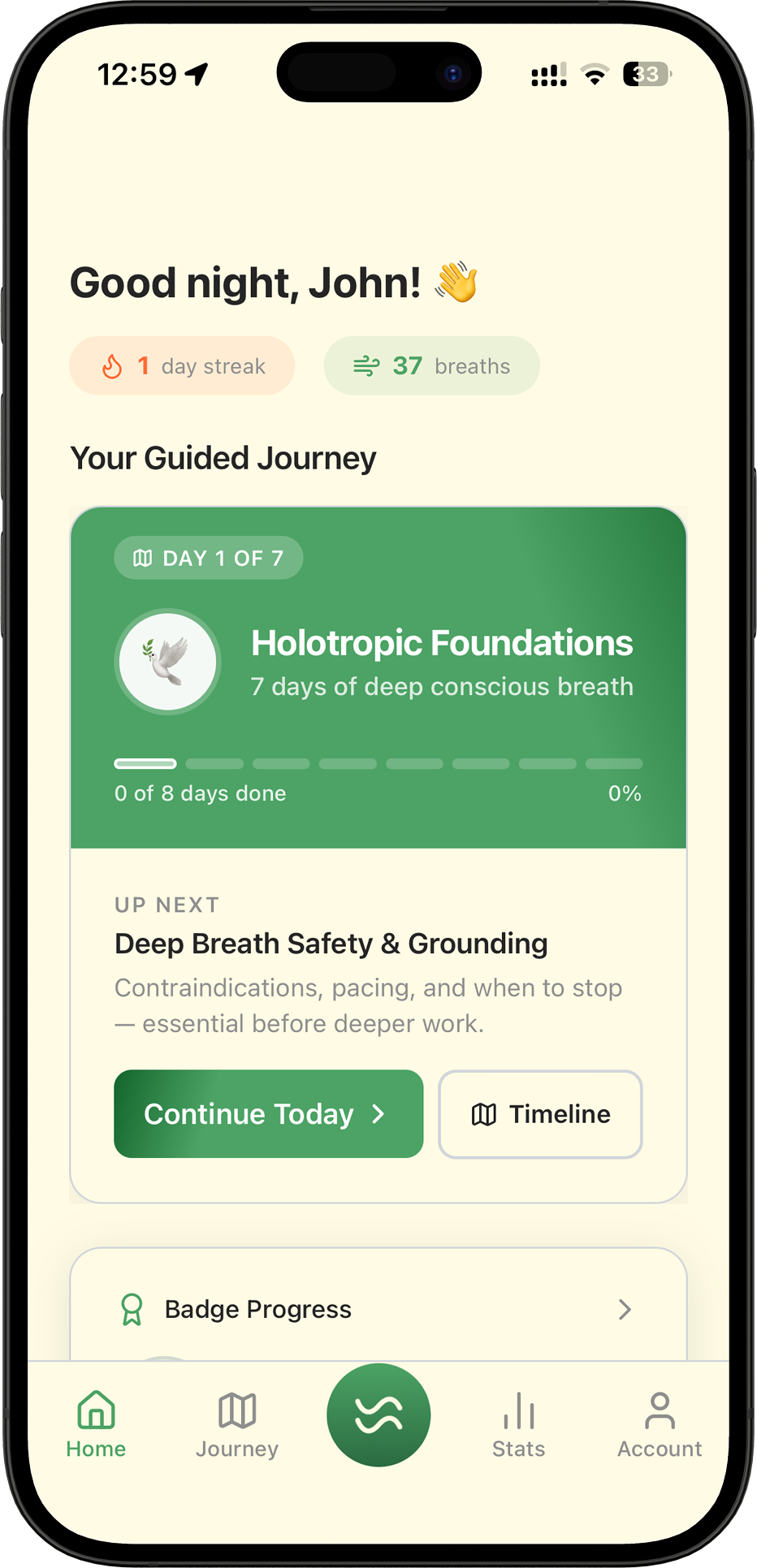
Subtle, office-friendly exercises with visual pacing and gentle prompts.
Breathworkk is designed specifically for professionals who need effective, time-efficient breathwork. Our app offers:
- Specialized flows for Focus, Energy, and Stress Relief
- Visual guides with expanding/contracting circles
- Science-backed techniques with proven results
- Progress tracking, reminders, and streaks
- Offline support for practice anywhere
- Discreet, office-friendly practice

Frequently Asked Questions
Can I do this silently in open offices?
Yes—keep the mouth closed and breathe quietly through the nose with relaxed exhales. Most breathing techniques can be practiced completely silently. The key is nose-only breathing, which is naturally quiet and subtle. No one will notice you're practicing breathwork, making it perfect for open office environments.
How often should I practice?
Use 2–3 minute resets 1–3 times daily. Consistency beats intensity. Start with once per day and gradually increase frequency as you notice the benefits. Many professionals find that 2-3 short sessions per day provide optimal results without disrupting their workflow.
Will this make me sleepy?
Coherent Breathing improves calm without drowsiness—ideal for daytime focus. While some techniques like 4-7-8 are designed for sleep, techniques like Box Breathing and Coherent Breathing actually enhance alertness and focus. The key is choosing the right technique for your goal.
How does breathwork improve workplace performance?
Breathwork improves workplace performance by reducing stress hormones, enhancing focus and cognitive function, improving emotional regulation, and increasing energy levels. Research shows that regular breathwork practice can improve decision-making, reduce burnout, enhance creativity, and increase overall productivity. The practice also improves heart rate variability, a marker of resilience and adaptability.
Can breathwork help with public speaking anxiety?
Yes, breathwork is highly effective for public speaking anxiety. Box Breathing practiced before presentations can reduce nervousness, improve vocal control, and enhance presence. The technique activates the parasympathetic nervous system, counteracting the fight-or-flight response that causes public speaking anxiety. Many executives and professionals use breathwork specifically for this purpose.
What's the difference between breathwork and meditation?
While meditation often uses breathing as an anchor, breathwork focuses specifically on structured breathing patterns to produce immediate physiological effects. Breathwork provides measurable changes in heart rate, cortisol levels, and brain waves within minutes, making it more practical for busy professionals who need quick results. Meditation emphasizes mental awareness and long-term cognitive training.
How long until I see results?
Many benefits are immediate—you can feel calmer, more focused, and less stressed within just 2-5 minutes of practice. Physiological changes like reduced heart rate and lower cortisol can be measured immediately. For long-term benefits like improved emotional regulation, better decision-making, and enhanced resilience, consistent daily practice over several weeks produces cumulative improvements.
Can I practice during video calls?
Yes, you can practice breathwork during video calls by breathing quietly through your nose. If you need to be more discreet, you can mute your microphone and turn off your camera for a brief moment. Many professionals practice breathwork during conference calls, especially during listening portions where they don't need to speak.
Is breathwork safe for everyone?
Most breathwork techniques are safe for healthy individuals. However, if you have respiratory conditions, cardiovascular issues, or are pregnant, consult with a healthcare provider before starting breathwork practice. Start with gentle techniques like box breathing or coherent breathing, and always listen to your body. If you experience dizziness or discomfort, stop and return to normal breathing.
What if I don't have time for a full session?
Even 60 seconds of focused breathing can provide benefits. The key is consistency, not duration. If you only have a minute, practice 4-6 cycles of Box Breathing or a few extended exhales. These micro-sessions still activate the parasympathetic nervous system and provide stress relief. Remember: the best time to practice breathwork is when you feel you don't have time for it.
Explore More Resources
Breath Work App for Beginners
Start your breathwork journey with simple, guided techniques.
Breathing Exercises for Anxiety
Discover techniques specifically designed for anxiety relief.
What Is Breathwork?
Learn the science and benefits of breathwork practice.
Box Breathing vs Diaphragmatic Breathing
Compare these popular breathing techniques and their benefits.