Anxiety Relief
Breathing Exercises for Anxiety
Gentle, proven techniques to calm your nervous system and regain control in minutes.
Why breathing helps anxiety
Anxiety triggers your body's fight-or-flight response, causing rapid breathing, increased heart rate, and a cascade of stress hormones. Slow, controlled breathing does the opposite: it lengthens the exhale and activates the parasympathetic nervous system—your body's built-in calm response. This cues your body to shift out of fight-or-flight, reducing heart rate, lowering blood pressure, and quieting anxious sensations.
Unlike medication or therapy, breathing exercises are always available, work within minutes, and have no side effects. They give you an immediate tool to regain control when anxiety feels overwhelming.
Immediate relief
Feel calmer in 2-3 minutes. Some techniques work in under 60 seconds for acute anxiety.
No side effects
Safe, natural, and always available. No medication interactions or dependency concerns.
Builds resilience
Regular practice trains your nervous system to stay calmer under stress over time.
Works anywhere
Use discreetly at work, in public, or at home. No special equipment needed.
The science behind breathing and anxiety
Research from neuroscience and psychology labs shows that controlled breathing directly influences your autonomic nervous system—the part of your body that regulates stress responses, heart rate, and emotional states.
How it works physiologically:
- •Parasympathetic activation: Slow breathing with extended exhales stimulates the vagus nerve, which activates your parasympathetic nervous system—the "rest and digest" response that counteracts anxiety's "fight or flight" mode.
- •Heart rate variability (HRV): Controlled breathing increases HRV, a marker of nervous system flexibility. Higher HRV is associated with better stress resilience and lower anxiety levels.
- •Cortisol reduction: Studies show that breathing exercises can lower cortisol (the stress hormone) within minutes, reducing the physical symptoms of anxiety.
- •Prefrontal cortex activation: Slow breathing increases activity in the prefrontal cortex—the brain region responsible for emotional regulation and rational thinking—helping you think more clearly during anxious moments.
- •Carbon dioxide balance: Proper breathing techniques help maintain optimal CO2 levels in your blood, which affects pH balance and can reduce hyperventilation-related anxiety symptoms.
Research-backed benefits
- • Reduces anxiety symptoms by 20-40% in clinical studies
- • Lowers heart rate by 5-10 beats per minute within minutes
- • Improves sleep quality when practiced before bed
- • Enhances emotional regulation over time
Why the exhale matters
The exhale phase of breathing is particularly powerful for anxiety relief. When you extend your exhale (making it longer than your inhale), you activate the parasympathetic nervous system more strongly. This is why techniques like 4-7-8 breathing and Coherent Breathing emphasize longer, slower exhales.
Essential breathing techniques for anxiety
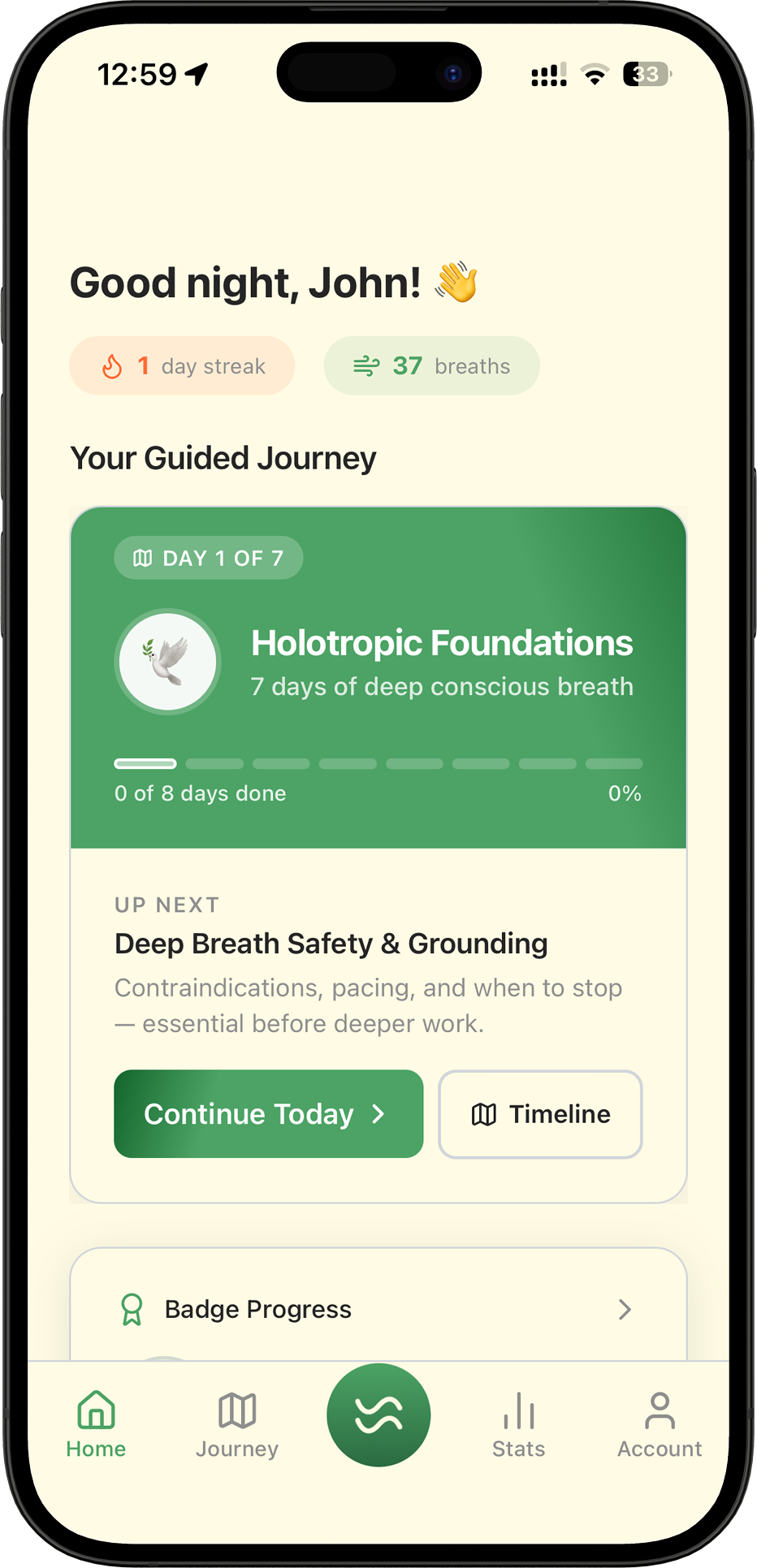
Use 2–5 minute sessions to ease anxious spikes. Practice with guided visual cues for best results.
1. Physiological Sigh (Fastest Relief)
Best for: Panic attacks, acute anxiety spikes, immediate relief
This technique works fastest for acute anxiety—calming effects in under 60 seconds. Developed by neuroscientist Dr. Andrew Huberman, it's the most rapid way to activate your parasympathetic nervous system.
How to do it:
- Take two quick, sharp inhales through your nose (one right after the other)
- Hold for a brief moment
- Exhale slowly and completely through your mouth (longer than the two inhales combined)
- Repeat 3-5 times
2. Box Breathing (4-4-4-4)
Best for: General anxiety, steadying nerves, maintaining focus
Also called "square breathing," this technique uses even counts to create a steady, predictable rhythm. The equal timing helps calm racing thoughts and provides a mental anchor during anxious moments.
How to do it:
- Inhale through your nose for 4 seconds
- Hold your breath for 4 seconds
- Exhale through your nose for 4 seconds
- Hold at the bottom for 4 seconds
- Repeat for 2-5 minutes
3. 4-7-8 Breathing
Best for: Evening anxiety, overthinking, sleep preparation, worry spirals
Developed by Dr. Andrew Weil, this technique emphasizes a longer exhale (8 seconds) which strongly activates the parasympathetic nervous system. The extended exhale is particularly effective for calming an overactive mind.
How to do it:
- Inhale through your nose for 4 seconds
- Hold your breath for 7 seconds
- Exhale through your mouth for 8 seconds (make a "whoosh" sound)
- Repeat 4-8 cycles
4. Coherent Breathing (5-6 breaths/min)
Best for: Daily practice, building resilience, sustained calm
This technique involves breathing at a specific rate (5-6 breaths per minute) that's been shown to optimize heart rate variability and create coherence between your heart rhythm and breathing. It's ideal for building long-term anxiety resilience.
How to do it:
- Breathe at a rate of 5-6 breaths per minute (about 5 seconds inhale, 5 seconds exhale)
- Keep breaths smooth and even—no pauses or holds
- Breathe through your nose
- Practice for 5-20 minutes
5. Extended Exhale Breathing (4 in / 6-8 out)
Best for: Quick resets, on-the-go anxiety relief, simple technique
This simple technique focuses on making your exhale longer than your inhale, which is the core principle behind most anxiety-reducing breathing exercises. It's easy to remember and can be adjusted to your comfort level.
How to do it:
- Inhale through your nose for 4 seconds
- Exhale through your nose for 6-8 seconds (longer than the inhale)
- No breath holds needed—just smooth, continuous breathing
- Repeat for 2-5 minutes
Quick anxiety relief protocol (2–3 minutes)
When anxiety strikes, follow this step-by-step protocol. It works for most anxiety situations and can be done anywhere, anytime.
Stop and acknowledge
Pause what you're doing. Acknowledge that you're feeling anxious—this is okay and temporary. Don't fight the feeling.
Find your posture
Sit upright if possible (or stand if sitting isn't available). Relax your jaw, drop your shoulders, and place one hand on your belly to feel your breath.
Choose your technique
For panic/acute anxiety: Physiological Sigh (3-5 cycles). For general anxiety: Box Breathing or 4 in / 6 out breathing.
Breathe smoothly
Keep breathing smooth and quiet. Nose breathing preferred. Make the exhale longer than the inhale. No forcing or straining.
Continue for 2-3 minutes
Give it time to work. Notice any shifts in your heart rate, muscle tension, or mental clarity. Repeat as needed.
Important safety note:
If you feel lightheaded or dizzy, slow down your breathing, reduce or eliminate breath holds, and make your exhale even longer. Stop if discomfort persists. If you have respiratory or cardiovascular conditions, consult your healthcare provider before practicing breath-holding techniques.
Breathing exercises for specific anxiety scenarios
Different anxiety situations call for different approaches. Here's how to use breathing exercises for common anxiety scenarios:
Panic attacks
When you're experiencing a full panic attack with rapid heartbeat, chest tightness, and feeling of doom:
Technique: Physiological Sigh
Do 5-10 cycles immediately. This works fastest—calming effects in under 60 seconds.
If you can't do the full technique, just focus on making your exhale longer than your inhale.
Anticipatory anxiety (before events)
When you're anxious about an upcoming event, meeting, presentation, or social situation:
Technique: Box Breathing
Do 3-5 minutes of Box Breathing (4-4-4-4) before the event. The steady rhythm helps calm racing thoughts.
Practice this technique regularly so it's automatic when you need it.
Social anxiety
When you're in a social situation and feeling anxious, self-conscious, or overwhelmed:
Technique: Extended Exhale (4 in / 6 out)
Breathe discreetly—no one will notice. Do 2-3 minutes to reset your nervous system.
You can do this while "listening" or "thinking"—it looks natural.
Evening anxiety and overthinking
When you're lying in bed with racing thoughts, worries, or can't stop overthinking:
Technique: 4-7-8 Breathing
Do 8-10 cycles while lying in bed. The longer exhale helps quiet your mind and prepare for sleep.
If 4-7-8 feels too long, use 4 in / 6 out breathing instead.
Workplace anxiety
When you're feeling anxious at work—before meetings, during stressful tasks, or after difficult interactions:
Technique: Box Breathing or Coherent Breathing
Take a 2-3 minute break. Do Box Breathing at your desk (looks like you're thinking) or step away for Coherent Breathing.
Set reminders to practice every 2-3 hours during stressful workdays.
Health anxiety
When you're worried about your health, experiencing physical symptoms, or stuck in health-related worry spirals:
Technique: Coherent Breathing or Extended Exhale
Do 5-10 minutes of slow, steady breathing. This helps regulate your nervous system and reduces physical anxiety symptoms.
Focus on the breath itself rather than your worries. The breathing becomes your anchor.
Generalized anxiety (persistent worry)
When you're experiencing ongoing, low-level anxiety throughout the day:
Technique: Daily Coherent Breathing practice
Practice 10-15 minutes of Coherent Breathing daily (morning is ideal). This builds long-term resilience and reduces baseline anxiety.
Add 2-3 minute resets throughout the day using Box Breathing or Extended Exhale as needed.
Daily plan to build anxiety resilience
Consistency is key for building long-term anxiety resilience. Here's a comprehensive daily plan that you can adapt to your schedule:
Morning routine (5–10 min)
Start your day with:
- • 5-10 minutes of Coherent Breathing
- • Sets a calm baseline for the day
- • Reduces morning anxiety spikes
- • Improves focus and clarity
Best time: Right after waking, before checking phone/email
Midday reset (2–3 min)
Prevent stress buildup:
- • 2-3 minutes of Box Breathing
- • Steady focus between tasks
- • Prevents cumulative anxiety
- • Can be done at your desk
Best time: Every 2-3 hours, or before stressful meetings
Evening wind-down (5–10 min)
Prepare for rest:
- • 5-10 cycles of 4-7-8 Breathing
- • Or 5-10 minutes Coherent Breathing
- • Downshift from daily stress
- • Reduces evening anxiety
Best time: 30-60 minutes before bed
On-demand relief (as needed)
When anxiety spikes:
- • Physiological Sigh for panic (3-5 cycles)
- • Extended Exhale (4 in / 6 out) for quick resets
- • Box Breathing for steadying nerves
- • 2-3 minutes usually sufficient
Use anytime you feel anxious—don't wait for it to escalate
Weekly progression plan
Week 1: Foundation
Focus on one technique (Box Breathing). Practice 3-5 minutes daily. Goal: Build the habit.
Week 2: Expansion
Add morning Coherent Breathing (5 min). Keep Box Breathing for midday. Goal: Two daily sessions.
Week 3+: Integration
Add evening 4-7-8. Use on-demand techniques as needed. Goal: Full daily routine with flexibility.
Tips for building consistency
- •Start small: 2-3 minutes is better than skipping entirely
- •Link to existing habits: "After I brush my teeth, I'll breathe for 3 minutes"
- •Set phone reminders for your chosen practice times
- •Track your practice: Use an app or simple calendar checkmarks
- •Be flexible: Missed morning? Do it at lunch. Consistency > perfection
- •Notice improvements: Better sleep? Calmer mornings? Use these as motivation
Understanding anxiety: symptoms, triggers, and adjustments
Physical symptoms
- • Rapid or irregular heartbeat
- • Chest tightness or pain
- • Shallow, rapid breathing
- • Sweating or chills
- • Muscle tension (especially shoulders, jaw)
- • Dizziness or lightheadedness
- • Stomach upset or nausea
- • Trembling or shaking
Mental/emotional symptoms
- • Racing or intrusive thoughts
- • Excessive worry or fear
- • Difficulty concentrating
- • Feeling overwhelmed
- • Irritability or restlessness
- • Feeling disconnected or unreal
- • Anticipating worst-case scenarios
- • Difficulty making decisions
Common triggers
Lifestyle factors
Caffeine, alcohol, poor sleep, irregular meals, dehydration, lack of exercise
Environmental factors
Stressful work, relationship conflicts, financial worries, major life changes
Digital/mental factors
Constant notifications, social media, information overload, over-scheduling
Physical factors
Chronic pain, illness, medication side effects, hormonal changes
Breathing adjustments for symptoms
Rapid heartbeat
Use Coherent Breathing (5-6 breaths/min) or Extended Exhale. The slower pace directly lowers heart rate.
Chest tightness
Focus on belly breathing—place hand on belly, breathe into it. Avoid forcing chest expansion.
Racing thoughts
Box Breathing's steady rhythm provides a mental anchor. Count each phase to redirect attention.
Dizziness
Eliminate breath holds, slow down pace, make exhale longer. Sit down if needed.
What to avoid during breathing exercises
❌ Over-breathing
Taking breaths that are too deep or too fast can cause hyperventilation and increase anxiety.
❌ Forcing the inhale
Let the inhale be natural and relaxed. The exhale is more important for anxiety relief.
❌ Going too fast
Rushing through the technique defeats the purpose. Slow, steady breathing is key.
❌ Breath-holding too long
If breath holds cause discomfort, reduce or eliminate them. They're optional.
❌ Perfectionism
Don't worry about perfect counts. Approximate timing is fine—consistency matters more.
❌ Ignoring discomfort
If you feel dizzy, lightheaded, or unwell, stop and adjust. Listen to your body.
Tips for success and common mistakes
✓ Best practices
- •Practice before you need it: Don't wait for anxiety to strike. Regular practice makes techniques automatic when you need them most.
- •Start with shorter sessions: 2-3 minutes is better than skipping. You can always extend later.
- •Use guided apps: Visual cues take the mental effort out of practice and help maintain proper rhythm.
- •Focus on the exhale: The longer, slower exhale is more important than the inhale for anxiety relief.
- •Be patient: Give techniques 2-3 minutes to work. Don't expect instant results after 30 seconds.
- •Combine with other tools: Breathing works well with therapy, medication (as prescribed), exercise, and lifestyle changes.
⚠️ Common mistakes
- •Waiting until crisis: Using breathing only during panic attacks. Prevention through daily practice is more effective.
- •Giving up too soon: Stopping after 30 seconds because "it's not working." Give it 2-3 minutes minimum.
- •Switching techniques constantly: Pick one or two techniques and master them rather than trying everything.
- •Expecting perfection: Worrying about exact counts or perfect technique. Approximate is fine—consistency matters more.
- •Ignoring physical comfort: Practicing in uncomfortable positions or ignoring pain/discomfort. Comfort supports relaxation.
- •Using as sole treatment: Relying only on breathing when professional help is needed. It's a tool, not a replacement for therapy.
When to seek professional help
While breathing exercises are valuable tools, they're not a replacement for professional mental health care. Consider seeking help if:
- •Anxiety significantly interferes with daily life, work, or relationships
- •You experience frequent panic attacks
- •Anxiety is accompanied by depression or other mental health concerns
- •You're using substances to cope with anxiety
- •Breathing exercises aren't providing relief after consistent practice
- •You have thoughts of self-harm or suicide
Breathing exercises work best as part of a comprehensive treatment plan that may include therapy, medication (when appropriate), lifestyle changes, and other interventions.

Guided relief for anxious moments
Follow simple visual cues and gentle pacing to settle your breath quickly.

Frequently asked questions
Should I breathe through my nose or mouth?
Prefer nose breathing for most techniques—it activates the parasympathetic nervous system more effectively and filters/humidifies air. However, during panic attacks or when you need faster relief, a gentle mouth exhale (like in 4-7-8 breathing) can help extend the out-breath and provide immediate relief.
How often should I practice breathing exercises for anxiety?
Use 2–3 minute resets as needed during anxious moments. For building resilience, aim for daily practice: 3–5 minutes in the morning, 2–3 minutes midday, and 2–4 minutes in the evening. Consistency matters more than duration—even 2 minutes daily is better than longer sessions done sporadically.
Is this a replacement for therapy or medication?
No. Breathing exercises are a valuable tool for managing anxiety symptoms, but they are not a replacement for professional mental health care, therapy, or medication when needed. They work best as part of a comprehensive treatment plan. If anxiety significantly impacts your life, consult a mental health professional.
What's the difference between anxiety and panic attacks?
Anxiety is a persistent state of worry, tension, and apprehension. Panic attacks are sudden, intense episodes of fear with severe physical symptoms (rapid heartbeat, chest pain, shortness of breath, feeling of doom). The Physiological Sigh works fastest for panic attacks (under 60 seconds), while Box Breathing and Coherent Breathing are better for general anxiety management.
Can I do breathing exercises if I have asthma or COPD?
Consult your healthcare provider first. Generally, gentle breathing exercises without breath holds can be safe, but avoid techniques that involve holding your breath or forced breathing. Extended exhale breathing (4 in / 6 out) without holds is often the safest option. Never practice if it causes breathing difficulties.
Why do I feel more anxious when I try to breathe deeply?
Forcing deep breaths can trigger hyperventilation and actually increase anxiety. Instead, focus on slow, gentle breathing with a longer exhale. Don't force the inhale—let it be natural. The key is the slow, extended exhale, not deep inhales. Try Extended Exhale (4 in / 6 out) or Coherent Breathing instead of "deep breathing."
How long until I see results?
Many people feel immediate relief (within 2-3 minutes) during anxious moments. For building long-term resilience and reducing baseline anxiety, expect to notice improvements after 1-2 weeks of consistent daily practice. Some people notice better sleep within days, while reduced overall anxiety may take 2-4 weeks of regular practice.
Can I do breathing exercises while lying down?
Yes, absolutely. Lying down is fine for most techniques, especially 4-7-8 breathing before bed. Just ensure you're comfortable and not falling asleep during practice (unless that's your goal). For daytime practice, sitting upright is often better for alertness, but lying down works if that's what you need.
What if I can't focus or my mind keeps wandering?
This is normal, especially when anxious. Don't fight it—gently return your attention to your breath when you notice wandering. Counting (like in Box Breathing) can help anchor your attention. Using a guided app with visual cues also helps maintain focus. The practice of returning to the breath is itself valuable for anxiety management.
Should I practice at the same time every day?
Consistency in timing helps build the habit, but flexibility is important too. If you miss your usual morning practice, do it at lunch. The key is daily practice, not perfect timing. However, having set times (like "after morning coffee" or "before bed") makes it easier to remember and maintain the habit.
Can breathing exercises help with social anxiety?
Yes. Practice before social events using Box Breathing or Extended Exhale. During social situations, you can breathe discreetly (Extended Exhale works well—no one will notice). Regular daily practice also builds overall anxiety resilience, which helps with social anxiety over time. Combine with exposure therapy and other treatments for best results.
What if I feel lightheaded or dizzy?
Slow down your breathing, eliminate or reduce breath holds, and make your exhale even longer. If dizziness persists, stop and return to normal breathing. Dizziness usually means you're breathing too fast or holding too long. Adjust the technique to be gentler. If dizziness is severe or frequent, consult your healthcare provider.
Keep learning
Breath work app for beginners
Start simple routines and build confidence with gentle techniques.
Breath work for business professionals
Quick resets to stay focused and manage work stress.
Breathing app for students
Manage exam stress and academic anxiety with proven techniques.
Breathing app for burnout
Gentle exercises for recovery from chronic stress and exhaustion.